
Do you know exactly who is responsible when the lights go out, and why Oncor Electric Delivery is likely the most important company you rarely interact with directly?
If you live in many parts of Texas, particularly the Dallas-Fort Worth area and surrounding regions, you might see the name Oncor Electric Delivery on your bill or notice their trucks during a storm. Yet, there is often tremendous confusion about what they actually do versus what the company that sends you your monthly bill does. As an Independent Consultant working closely with retail providers like Ambit Energy, I deal with this confusion daily. I help customers understand the crucial mechanics behind the scenes—from the maintenance of high-voltage power lines to the urgent response during outages—so they know exactly who does what in the complex Texas energy market.
While a company like Ambit Energy supplies the financial plan for your electricity, Oncor Electric Delivery ensures the reliable physical delivery of that power to your home or business. My role here is to demystify this process, provide actionable information based on real industry experience, and help you navigate the Texas power grid with confidence. This comprehensive guide will break down everything you need to know about Oncor, from their infrastructure to their critical role in outage management.
What Is Oncor Electric Delivery Exactly?
Oncor Electric Delivery is not an “electric provider” in the way most Texans use the term today; they don’t sell electricity plans to residential customers. Oncor is a regulated electric utility business. In industry terms, they are a Transmission and Distribution Utility (TDU), sometimes referred to as a Transmission and Distribution Service Provider (TDSP).
Think of them as the logistics and infrastructure backbone of the power grid in their service territory. They don’t generate the electricity (power plants do that), and they don’t handle your retail billing account (REPs do that). Oncor Electric Delivery is responsible for the physical journey of electricity.
They operate the largest distribution and transmission system in Texas, delivering power to more than 13 million Texans. Their job is to maintain the poles, wires, transformers, and advanced meters that make modern life possible. If it’s hardware sitting outside your house that brings power inside, it likely belongs to the oncor utility company.
The Texas Electricity Puzzle: Who Does What?
To truly understand the role of Oncor Electric Delivery, we have to first step back and look at the deregulated electricity market in Texas. Before deregulation, one vertically integrated company handled everything: generating the power, transmitting it, selling it to you, and billing you. Today, those roles are split.
This split often creates a “problem” for the average consumer: confusion during a crisis. When the power goes out at 2:00 AM during a thunderstorm, who do you call? The company that sends the bill, or the company that owns the wires? The consequence of not knowing is wasted time and increased stress during already tense situations.
The solution is understanding the distinct separation between your Retail Electric Provider (REP) and your Transmission and Distribution Utility (TDU).
The Critical Difference: Oncor Electric Delivery vs. Your Retail Energy Provider (REP)
This is the most common point of confusion I encounter as a consultant. Many people believe that if they switch from one energy provider to another, the quality or reliability of their electricity will change. That is a myth.
The reliability of your power depends almost entirely on Oncor Electric Delivery (or whichever utility serves your area), regardless of who sends you the bill.
Here is the easiest analogy: Think of the electricity grid as a vast network of highways and toll roads.
- Oncor Electric Delivery owns and maintains the highway system. They fix the potholes, manage traffic signals, and clear debris after a storm. They ensure the road is drivable.
- Your Retail Electric Provider (like Ambit Energy, Reliant, TXU, etc.) is like a trucking company using that highway to ship goods to your house. You choose the trucking company based on their prices or customer service, but they all use the exact same road.
If there is a roadblock (a power outage), it doesn’t matter which trucking company you hired; the road owner—Oncor Electric—has to fix it.
Below is a breakdown of responsibilities to make it absolutely clear:
| Responsibility | Oncor Electric Delivery (TDU/Utility) | Retail Electric Provider (REP) |
| Owning Poles & Wires | Yes. They build and maintain infrastructure. | No. |
| Fixing Power Outages | Yes. They dispatch crews to restore service. | No. They can only relay your report. |
| Reading Your Meter | Yes. They manage advanced metering systems. | No. They receive data from Oncor. |
| Tree Trimming near Lines | Yes. Vital for safety and reliability. | No. |
| Selling Electricity Plans | No. | Yes. They set your rate per kWh. |
| Sending Monthly Bills | No. | Yes. |
| Handling Billing Disputes | No. | Yes. |
Understanding this table is key to knowing who to contact when you have an issue.
My Experience as a Consultant: Navigating the Oncor Territory
In my professional experience helping clients choose plans with providers like Ambit Energy within the Oncor electric Texas territory, I have seen firsthand the massive scale of their operations. Oncor covers a vast geography, including major metropolitan hubs like Dallas and Fort Worth, extending to areas in West Texas and Central Texas.
When I help a client set up new service, the Retail Electric Provider sends an electronic order to Oncor Electric Delivery. Oncor then performs the physical connection—which, thanks to smart meters, is usually done remotely and quickly.
The most frequent friction point occurs when clients see “Delivery Charges” on their bills and assume their chosen provider is tacking on hidden fees. Part of my job is explaining that these are pass-through charges from Oncor utilities, regulated by the state, which I will detail later in this article. Trust is built when clients understand that the entity maintaining the electrical infrastructure outside their window is different from the entity emailing them their bill.
When the Lights Go Out: Oncor’s Role in Outage Management
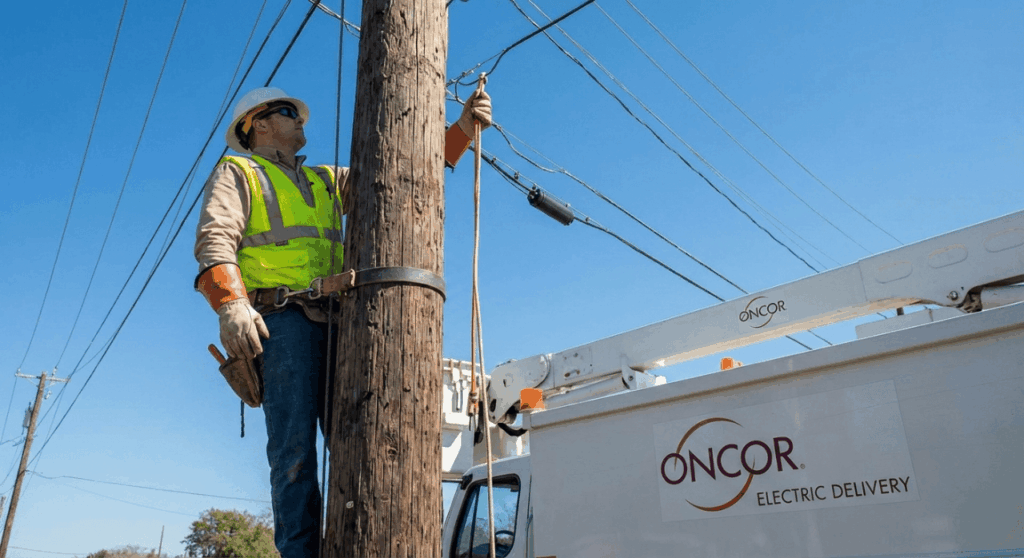
This is where the rubber meets the road. When your power goes out, your immediate instinct might be to call the company you pay every month. While many REPs, including Ambit Energy, have mechanisms to forward outage reports, the most efficient path is going straight to the source: Oncor Electric Delivery.
Oncor electric delivery Dallas and their crews across the state are the only ones who can physically restore power. They operate sophisticated outage management systems that often detect interruptions before customers even call, thanks to advanced metering infrastructure.
How to Report a Power Outage to Oncor Electric
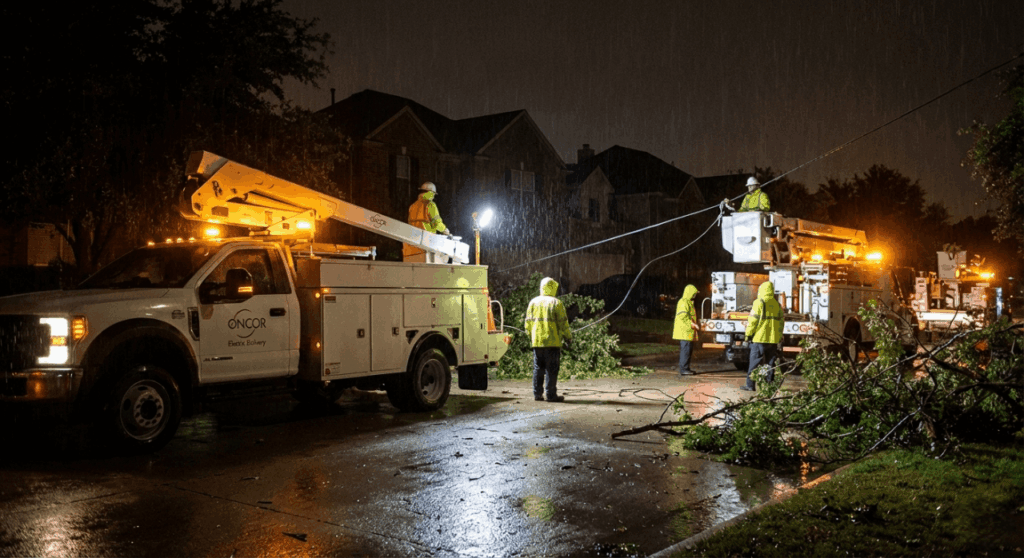
If you experience an outage, speed and accuracy in reporting are essential. Do not assume your neighbors have reported it.
- Digital Reporting (Preferred): The fastest way is usually through the oncor com website or their dedicated mobile app. They have streamlined tools specifically designed for mobile devices to allow you to report an outage in seconds.
- Phone Reporting: You can call the Oncor Electric Delivery 24-hour outage line. Keep this number saved in your phone for emergencies. (Note: As an AI, I will not provide the specific number here to avoid it becoming outdated, but it is prominently listed on your electric bill and the oncor utility Texas website).
- Text Reporting: Oncor offers a service where you can register your mobile phone to report outages via text message, which is highly effective when data networks are congested during major storms.
Important Safety Note: Never approach a downed power line. Assume it is energized and dangerous. Call 911 and Oncor immediately if you see a downed line.
Understanding Oncor’s Restoration Process
It helps to manage expectations during a major storm event if you understand how an oncor power company prioritizes restoration. It is not random, and it is not based on who calls the most.
When a widespread event occurs, Oncor Electric follows a triage system tailored for public safety and grid stability:
- Critical Infrastructure: The top priority is always facilities vital to public health and safety, such as hospitals, police stations, fire departments, and critical water treatment plants.
- Transmission High-Voltage Lines: Before individual neighborhoods can have power, the massive transmission lines that carry bulk electricity must be functional. These are the main arteries of the power grid.
- Substations and Main Distribution Feeders: Fixing these restores power to the largest number of customers at once. A single repair here might bring thousands of homes back online.
- Local Distribution Lines: These are the lines running down specific streets, serving smaller groups of homes or businesses.
- Individual Service Drops: The final stage is repairing damage affecting single homes, such as the wire running from the pole to your specific meter.
Understanding this hierarchy explains why you might see an oncor electric company truck drive past your street without stopping during a major outage; they are likely heading to a main feeder line that will restore power to your entire neighborhood faster than fixing individual houses one by one.
Decoding Your Electric Bill: The “Oncor Charges” Explained
Perhaps the most confusing aspect for consumers in the oncor electric delivery service area is the electric bill itself. You will almost always see line items distinct from your energy charge, often labeled as “TDU Delivery Charges,” “Oncor Pass-Through Charges,” or similar wording.
What Are TDU Delivery Charges?
These charges cover the cost of moving electricity from the power plant to your home. They are the fees paid to Oncor Electric Delivery for maintaining the poles, wires, meters, and paying the crews that respond to outages.
It is vital to understand two things about these charges:
- They are Regulated: Your Retail Electric Provider does not arbitrarily set these prices. They are approved by the Public Utility Commission of Texas (PUCT). Oncor electric delivery must justify their costs to regulators to have these rates approved.
- They are Pass-Throughs: Your energy provider collects this money from you and passes it directly to Oncor. Whether you use Ambit Energy or any other competitor, the oncor electric delivery charges will be identical for the same usage level in the same area.
These charges usually consist of a fixed monthly basic customer charge and a volumetric charge based on how many kilowatt-hours (kWh) you use. This means the more electricity you consume, the higher the total delivery cost portion of your bill will be, as you are utilizing more of the power distribution network.
The Scope of Oncor’s Electrical Infrastructure in Texas
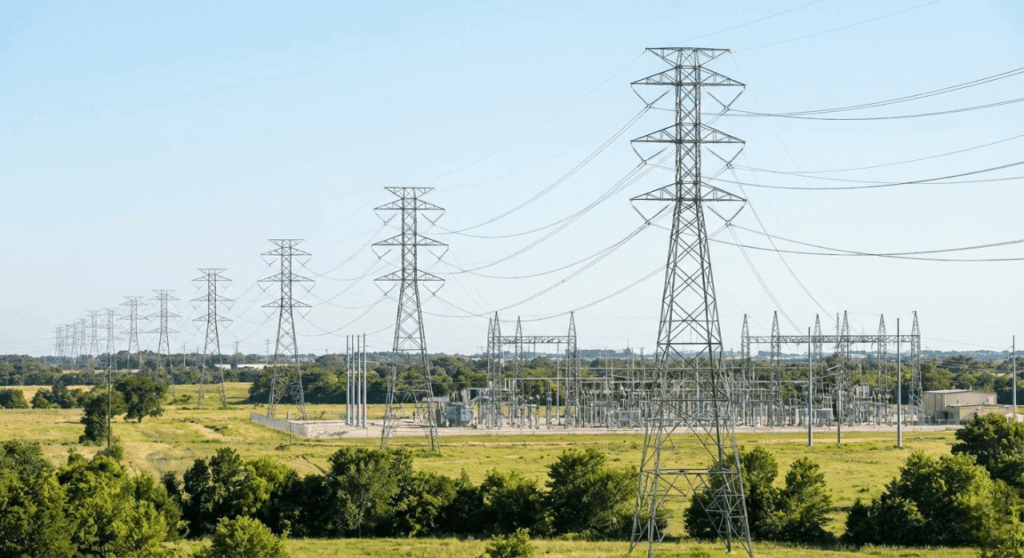
To appreciate the monumental task of maintaining reliability, one must look at the sheer scale of the oncor energy delivery footprint. They are the largest energy delivery company in Texas.
Their infrastructure includes:
- Over 143,000 miles of distribution and transmission lines. To put that in perspective, that is enough wire to circle the globe more than five times.
- Millions of strategically placed utility poles and transmission towers.
- Hundreds of substations that step down high-voltage power to safer levels for residential use.
- Advanced metering systems deployed across nearly their entire customer base, enabling faster service requests and better outage detection.
Managing this infrastructure requires constant investment. Oncor Electric invests billions in updating aging equipment, integrating new technologies, and expanding the grid to meet the demands of Texas’s growing population and economy. This investment is what the TDU charges on your bill support.
Oncor’s Commitment to Safety and the Power Grid
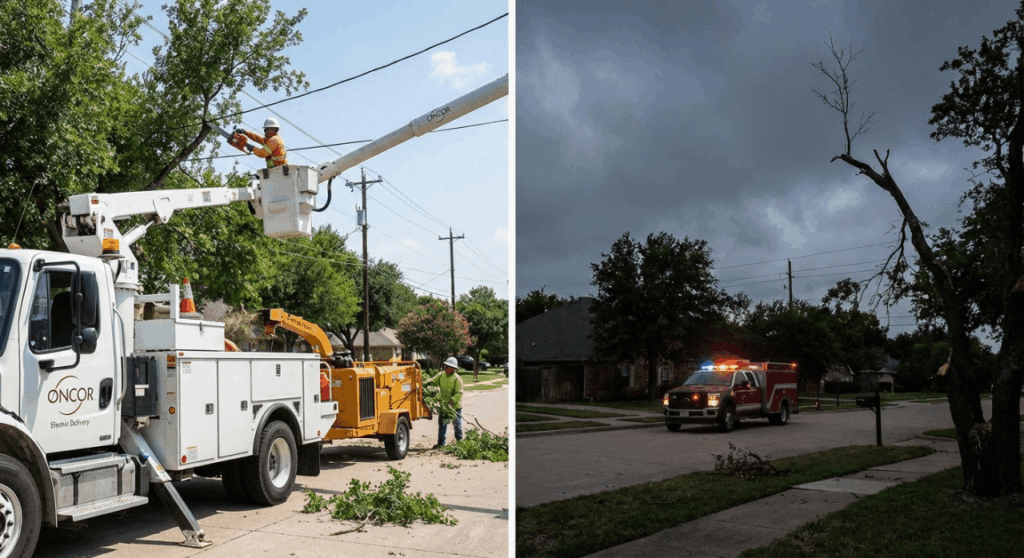
Beyond just keeping the lights on, a primary focus of any major electric utility like Oncor is safety. Electricity is inherently dangerous, and managing the physical infrastructure requires rigorous safety protocols.
Oncor Electric Delivery runs extensive public safety campaigns reminding people to “Look Up and Live” around power lines, especially when working outdoors with ladders or tools. They also manage an aggressive vegetation management program. While homeowners sometimes get frustrated when Oncor crews trim their trees, this is a critical safety and reliability measure. Tree branches touching power lines are a leading cause of power outages and electrical fires, especially during high winds.
Furthermore, Oncor plays a vital role in grid modernization and the integration of renewable energy. As Texas generates more wind and solar power, the transmission grid must be robust enough to move that power from remote areas (like West Texas wind farms) to population centers (like Dallas). Oncor Power Delivery is heavily involved in building and maintaining the high-voltage transmission lines necessary for this green energy transition.
Frequently Asked Questions About Oncor Electric Delivery
As a consultant, I hear the same questions repeatedly. Here are rational, clear answers to common queries regarding Oncor electric.
Is Oncor Electric Delivery my electric provider?
No. Oncor is your Transmission and Distribution Utility (TDU). They deliver the power, but you do not buy electricity plans directly from them. You buy your plan from a Retail Electric Provider (REP).
Can I switch away from Oncor if I am unhappy with their service?
Generally, no. If you live in their service territory, Oncor Electric Delivery is the designated utility owning the poles and wires attached to your home. You can switch your Retail Electric Provider (who bills you) as often as your contract allows, but the delivery company remains the same based on your physical location.
Why is my bill so high if Oncor just delivers the power?
Your bill includes both the cost of the electricity itself (supply charges from your REP) and the cost of delivering it (TDU charges from Oncor). High usage during Texas summers drives up both portions of the bill. Remember, Oncor charges are regulated pass-through costs that support the maintenance of the entire grid infrastructure.
Who do I call about a downed power line?
Call 911 immediately, and then contact Oncor Electric Delivery on their emergency line. Do not go near the line.
Does Oncor handle solar panel hookups?
Yes. If you install residential solar panels, Oncor Electric is responsible for the “interconnection”—ensuring your system safely connects to the grid and that your bi-directional meter is working correctly to record any excess power you send back.
Empowering Yourself with Knowledge
Navigating the Texas electricity market can be complex, but understanding the fundamental difference between the company that sells you power and the company that delivers it is the first step toward being an empowered consumer.
Oncor Electric Delivery is the silent backbone of power for millions of Texans. They are the engineers, the linemen climbing poles in the rain, and the grid operators ensuring stability. While you will continue to interact mostly with your chosen electricity provider for billing and plan selection, knowing that Oncor is the entity responsible for the physical wires gives you the clarity needed when unexpected issues arise.
When the storm hits and the lights flicker, save yourself the confusion. Know who owns the poles, know how to report the outage directly to Oncor electric, and rest assured that the crews are working the established safety protocols to get your life back to normal. Are you unsure if you are in the Oncor service area, or do you need help understanding the delivery charges on your current bill? Don’t stay in the dark about your energy service. Take control of your electricity choices today by ensuring you have the right retail plan to pair with your Oncor delivery service. Reach out to a certified energy consultant for a personalized review of your energy needs.
0 Comments